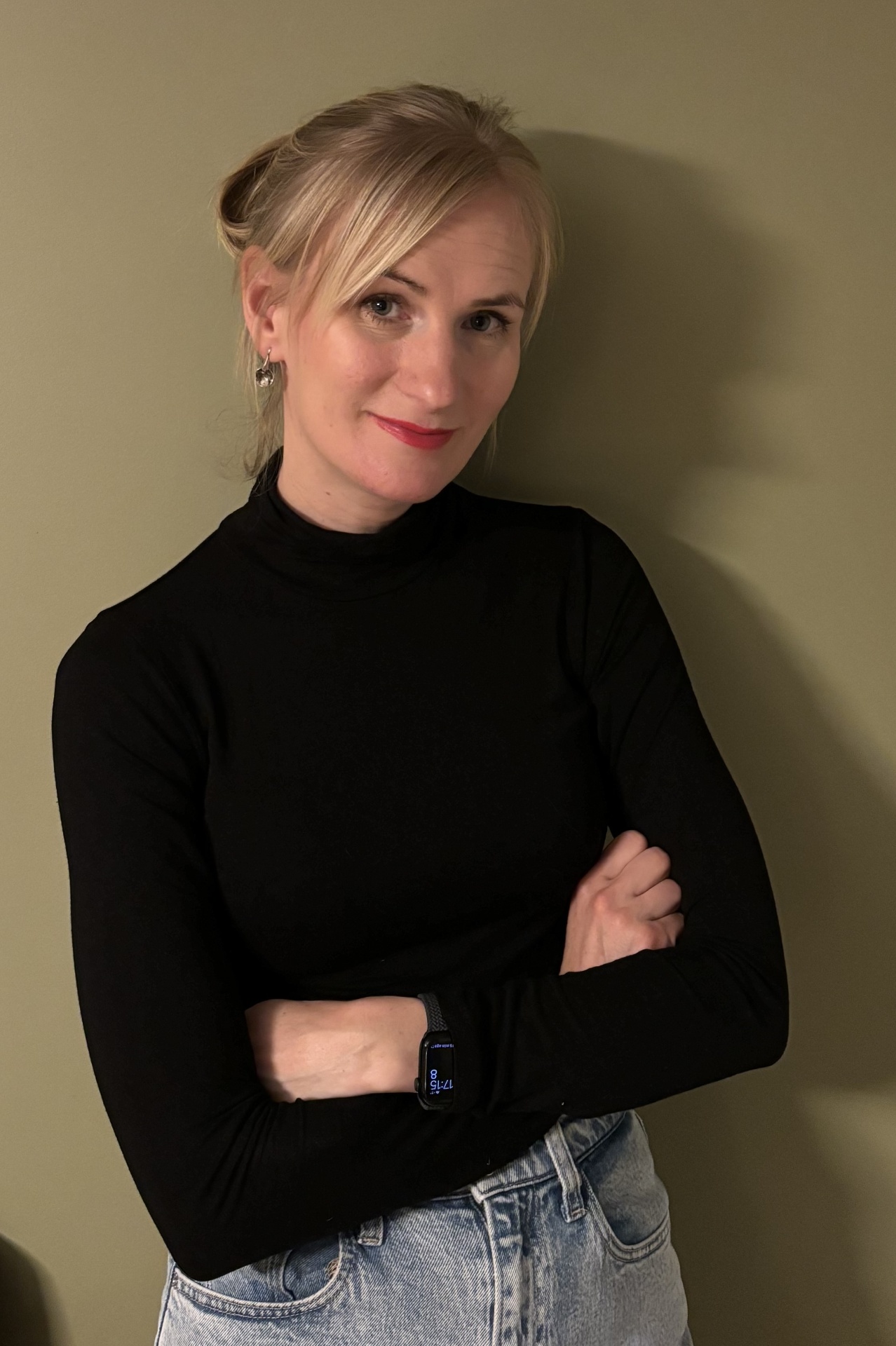
With an international business management background (EBS and Bocconi University), my career started in media and advertising agencies, followed by a role at a digital media agency in London, where I helped plan and coordinate Google's B2B campaigns across the EMEA region — working in an office with colleagues from 27 different nationalities, which gave me a close, practical sense of how much strength a genuinely diverse team can hold. I then led marketing and community strategy for a pan-Baltic real estate and coworking business — a role that made the connections between workplace culture, employer brand and everyday employee experience impossible to ignore.
That observation led me back to study — health behaviour and wellbeing at Tallinn University, and work psychology at TalTech — alongside a hands-on HR role at Telia focused specifically on workplace wellbeing, where I analysed employee experience data, helped launch a mindfulness programme, and supported internal communication around mental health and inclusion. It was also where I saw firsthand how genuinely strong organisational culture shapes employee experience and wellbeing — and had the chance to contribute to employer branding in a place where I could talk openly about real strengths, without ever needing to invent or embellish anything.
Today I work as an independent workplace wellbeing consultant, combining that research with practical organisational experience — helping leaders and HR teams turn psychosocial insight into concrete, sustainable improvements.
I'm an active member of both PARE (the Estonian HR Management Association) and ETOP (the Estonian Work and Organisational Psychology Association) — and much of what drives this work is bringing those two worlds closer together. Organisational leaders, HR practitioners, and work and organisational psychologists are often working toward the same outcome from different starting points; connecting them, I believe, is how working life actually gets better.